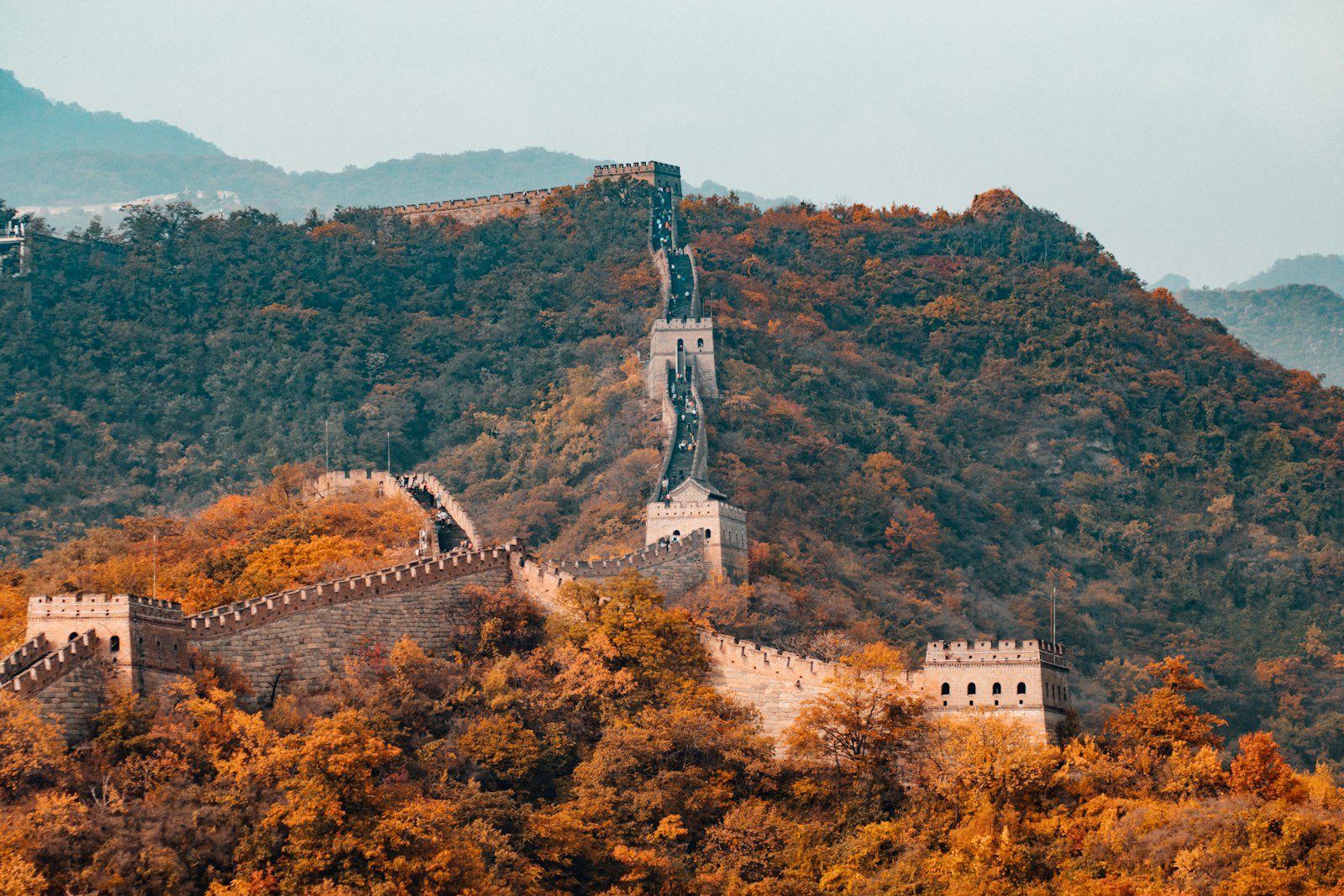
The huanghuacheng great wall, often celebrated as the “Great Wall over Water,” is one of the most breathtaking and least-crowded sections of China’s Ming Dynasty frontier defense system. Located in the Huairou District of Beijing, this extraordinary fortification plunges into the emerald waters of the Xishuiyu Reservoir, creating a delicate dance between ancient stone and living water that you will not find anywhere else along the Great Wall’s vast span.
Historical Background
The story of the huanghuacheng great wall begins in the year 1404, during the early Ming Dynasty under the reign of the Yongle Emperor. After relocating the imperial capital to Beijing, the emperor recognized an urgent need to fortify the northern approaches to his new seat of power. Huanghuacheng was built as part of this sprawling network, strategically placed to guard a crucial river valley that wound through the rugged Yanshan Mountains toward the capital plain.
The name “Huanghuacheng” translates to “Yellow Flower City,” a title drawn from the carpets of wild yellow flowers—chiefly forsythia and early chrysanthemums—that bloom across the surrounding hillsides every spring. The section was constructed using local granite and fired bricks, with towers that were later reinforced and upgraded under the command of the legendary General Qi Jiguang during the Longqing era (1567–1572). Qi Jiguang, one of the Ming Dynasty’s greatest military reformers, personally directed the rebuilding of hundreds of miles of wall, and Huanghuacheng bears his signature design improvements, including double-layered parapets and more robust watchtowers. Over the centuries, the wall fell into disrepair, but in the 1970s, the construction of the Xishuiyu Reservoir dramatically transformed the landscape, submerging a portion of the wall and giving birth to its iconic underwater silhouette.
Architectural Features
What makes the huanghuacheng great wall architecturally unique is its intimate relationship with water. Unlike most sections of the Great Wall, which stride across arid ridges and desolate peaks, Huanghuacheng descends from the steep forested slopes and disappears directly into the reservoir. The watchtowers that stand at the water’s edge—locally known as the “Trumpet Tower” and the “Front Tower”—are masterpieces of Ming military engineering. Built from large, precisely cut granite blocks and grey bricks bonded with lime mortar, these square towers originally served as both lookout posts and fortresses, housing soldiers who could rain arrows down upon any enemy attempting to ford the river below.
One of the most remarkable features is the ancient water gate, an arched passage embedded in the wall structure that allowed the stream to flow through naturally while still blocking enemy movement along the valley floor. This carefully engineered design demonstrates the Ming military’s sophisticated understanding of hydrology and terrain. The wall itself climbs the surrounding hills in a series of steep switchbacks, following the natural contours of the ridges with an almost organic flow. Along the restored sections, crenellated battlements, shooting loopholes, and drainage gutters survive intact, allowing modern visitors to appreciate the practical craftsmanship of 600-year-old builders. In the reservoir, when water levels are low during the dry winter months, the partially submerged wall can be seen snaking beneath the surface—a ghostly reminder of the landscape that existed before the dam.
Strategic Significance
Huanghuacheng occupied a position of immense strategic value in the Ming defensive system. Its valley served as a natural funnel leading southeast toward Beijing, and whoever controlled this passage could threaten the very heart of the empire. The wall here was not merely a barrier but a highly integrated defensive complex, deliberately placed to block the most practical invasion route while using the river as a natural moat. Reinforcing the waterway with masonry walls and well-armed towers meant that even a large cavalry force, which could easily cross open terrain elsewhere, would face a catastrophic bottleneck at this point.
Furthermore, the huanghuacheng great wall was part of a greater interconnected chain, linking westward to the formidable wild sections of Jiankou and eastward to the more heavily restored Mutianyu. This continuous line of fortifications meant that defenders could rapidly reinforce one another along the ridges, relaying signals with smoke, fire, and flag by day and beacon lamps at night. Thus, during the Ming Dynasty, Huanghuacheng was not an isolated outpost but a vital gear in the enormous machine of northern border defense, protecting Beijing from Mongol invasions that had repeatedly threatened the empire throughout the 15th and 16th centuries.
What to See Today
For modern travelers, the huanghuacheng great wall offers an atmospheric journey unlike any other. The centerpiece is, of course, the wall-meets-water panorama: panoramic cliffs of grey stone plunging into the calm, glassy reservoir. A boat ride across the water gives visitors the rare opportunity to view the Great Wall from its own “moat,” while the two water-adjacent watchtowers provide perfect vantage points for photography. On clear, windless days, reflections of the crenellated towers shimmer in the lake, creating mesmerizing mirrored compositions.
Equally memorable are the ancient chestnut trees that dot the slopes around the wall. Several of these gnarled giants are over 600 years old, with thick, twisting trunks that would have shaded Ming soldiers as they stood watch. The local legend holds that these trees were deliberately cultivated to provide a supplementary food source for the garrison—chestnuts are rich in starch and could be dried and stored for winter rations. Hikers can also explore the partially unrestored portions of the wall, where broken battlements overlook quiet forests and the clamor of tourist crowds gives way to pure wilderness stillness.
Visiting Tips
To make the most of your trip to the huanghuacheng great wall, plan carefully. Spring (late March to early May) is the most magical season, when the hillsides erupt with the yellow flowers that give the location its name, while autumn brings crisp air and brilliant foliage. Summer is lush but humid, and winter, though freezing, offers dramatic views of the wall cutting through snow-dusted peaks.
The site is approximately 70 kilometers northeast of central Beijing. The most convenient option is to hire a private driver or join a small tour group, since public buses require a combination of subway, intercity bus, and local taxi transfers that can take up to three hours each way. Budget a full day—five to six hours of exploration is ideal to cover the water areas, hike a portion of the hillside wall, and enjoy a leisurely lakeside lunch at one of the local farmhouse restaurants.
Wear sturdy hiking shoes with good grip, as many sections are steep and unmodified, with uneven stone steps. Bring water and sun protection in summer, and layers in cooler months. For photographers, arrive early in the morning to capture the golden light on the reservoir and avoid the midday tour groups. If you have a head for heights, continue the climb to the higher watchtowers for a bird’s-eye view of the entire valley. Above all, respect the site: leave no litter behind, refrain from climbing on crumbling sections, and help preserve this incredible monument so that future generations can continue to marvel at the great wall that touches the water.